Key Takeaways
- A modern data stack is a set of cloud-based tools that work together to move and analyze data.
- It replaces rigid, on-premises systems with flexible, modular components.
- Core layers include ingestion, storage, transformation, and visualization.
- Canadian businesses adopting cloud data tools report faster decision-making and lower IT overhead.
Defining the Modern Data Stack
A modern data stack is a collection of cloud-native tools that work together to collect, store, transform, and present data in a way that is fast, scalable, and easy to maintain. Unlike legacy systems built around a single monolithic platform, a modern stack is modular. Each layer, whether it handles ingestion, storage, or visualization, can be swapped out or upgraded independently as your business needs change.
This shift matters more than ever. Statistics Canada’s Survey of digital technology and internet use has tracked how Canadian enterprises are steadily increasing their use of cloud computing and advanced analytics tools, reflecting a broader national shift away from rigid, on-premises infrastructure.
Why Legacy Systems Are Falling Behind
Traditional data systems were built for a different era. They typically required significant upfront investment in physical servers, lengthy implementation timelines, and specialized staff just to keep the lights on. When business needs changed, the entire system often needed to be re-architected from the ground up.
According to ICTC’s Quarterly Digital Economy Pulse report, Canadian small and medium businesses continue to lag in adopting advanced technologies such as cloud computing and big data analytics, often citing high upfront costs and unclear return on investment as primary barriers. Modern data stacks directly address that gap by lowering the cost of entry and removing the need for heavy infrastructure investment.
The Core Layers of a Modern Data Stack
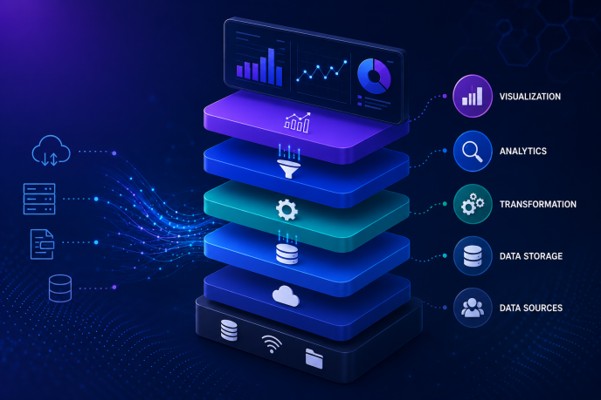
While every company’s stack looks slightly different, most modern architectures share the same fundamental building blocks. Understanding each layer helps clarify what you actually need versus what vendors might try to sell you.
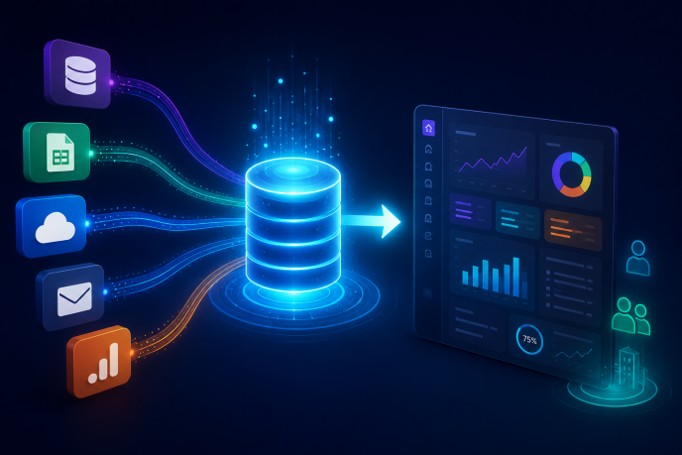
- Ingestion: Tools that pull data from your various sources, such as your CRM, website analytics, or finance software, into a central location.
- Storage: Cloud data warehouses or lakes that hold your data securely and scale automatically as your data volume grows.
- Transformation: The layer that cleans, organizes, and shapes raw data into something usable for analysis.
- Orchestration: Scheduling and automation tools that keep your pipelines running on time without manual intervention.
- Visualization and Analytics: Dashboards and reporting tools that turn processed data into insights your team can actually act on.
Data engineering services at Data Solutions Consulting focus specifically on building these pipelines so that each layer works seamlessly with the next, without creating fragile dependencies that break when one tool gets updated.
Cloud First, Not Cloud Eventually
One defining feature of the modern data stack is its commitment to cloud infrastructure from day one. Hosted and cloud native deployments already held over half of Canadian market revenue in 2024, with continued strong growth expected through the decade. Cloud platforms like Snowflake, BigQuery, and Databricks have become the default starting point for new data infrastructure projects, not an eventual migration target.
This cloud first approach delivers a few clear advantages worth understanding:
- Storage and compute scale automatically as data volume grows, without manual server upgrades.
- Teams pay only for what they use, rather than maintaining expensive idle infrastructure.
- New tools integrate faster because most modern platforms are built around open APIs and standard connectors.
The Business Case for Modernizing Your Stack
Beyond the technical appeal, there is a real productivity argument here. Canada’s overall labor productivity growth has been sluggish for years, and Statistics Canada’s research on AI adoption and firm productivity links weak capital investment in advanced technologies to that slowdown. The study found that AI adoption among Canadian firms doubled between 2024 and 2025, reaching 12.2% of firms, with an additional 14.5% planning adoption within the following year. A modern data stack is often the foundation that makes AI adoption realistic in the first place, since most AI tools depend on clean, well-organized, accessible data.
Canadian technology leaders remain more risk averse than their global counterparts, yet are still actively investing in modernizing their technology stacks to extract more value from existing data and prepare for AI integration.
Common Components You Will Encounter
If you start exploring vendor options, you will run into a familiar set of categories. Here is a simplified breakdown of what each one typically does:
- ETL and ELT Tools: Move data from source systems into your warehouse, either transforming it before loading (ETL) or after (ELT).
- Cloud Data Warehouses: Centralized, scalable storage built specifically for analytics workloads rather than transactional processing.
- Business Intelligence Platforms: Tools like Power BI or Tableau that turn warehouse data into dashboards and reports stakeholders can actually use.
- Reverse ETL Tools: Send processed insights back into operational systems like your CRM or marketing platform, closing the loop between analysis and action.
How to Know If You Need One
Not every company needs to overhaul its entire data infrastructure overnight. There are, however, some clear signals that a modern data stack would solve real, costly problems:
- Your team spends more time manually pulling and cleaning data than actually analyzing it.
- Reports take days to prepare and are often outdated by the time they are reviewed.
- Different departments have different numbers for the same metric because data lives in disconnected systems.
- You are considering AI or machine learning initiatives but are unsure if your data is reliable enough to support them.
Our case studies walk through how we have helped companies in exactly these situations move from fragmented spreadsheets to fully integrated, automated reporting systems.
Getting Started Without Overcomplicating Things
The biggest mistake companies make when modernizing their data stack is trying to build everything at once. A more sustainable approach starts small and expands deliberately.
- Step 1: Identify your highest priority reporting or analytics need, the one causing the most pain today.
- Step 2: Connect your most critical data sources into a central cloud warehouse before adding every possible integration.
- Step 3: Build clean, well-documented transformation logic so your data is trustworthy from the start.
- Step 4: Layer in dashboards and reporting once the foundation is solid, not before.
Conclusion
A modern data stack is not just a technical upgrade. It is a foundation for faster decisions, better reporting, and future readiness for AI. If you are unsure where to start or want a second opinion on your current setup, reach out to us today. We would be glad to walk through your specific situation.
FAQs:
What is a modern data stack in simple terms?
A modern data stack is a collection of cloud-based tools that work together to collect, store, transform, and present business data for analysis and decision-making.
How is a modern data stack different from a legacy system?
Legacy systems are typically rigid and on-premises, while modern data stacks are modular, cloud-native, and easier to scale, maintain, and update.
Do small businesses need a modern data stack?
Yes. As data volumes increase, a modern data stack helps businesses manage and analyze information more efficiently. Cloud-based tools have also made modern data infrastructure more affordable for smaller companies.
What tools are typically part of a modern data stack?
Common components include cloud data warehouses such as Snowflake, data transformation tools like dbt, and business intelligence platforms such as Power BI or Tableau.
How long does it take to build a modern data stack?
Implementation timelines vary depending on business requirements, but many organizations can establish a functional core data stack within a few weeks to a few months.
Is a modern data stack necessary before adopting AI tools?
While not always mandatory, having a clean and well-organized data foundation significantly improves AI performance and outcomes, making a modern data stack a practical first step for many businesses.